Feeds:
Posts
Comments

For some guests fine-dining and Michelin-starred restaurants are a regular part of life or even a hobby, but for others some uncertainty still remains about quite what to expect when you visit a restaurant such as L’ortolan.  We invited guest blogger Simon Carter, Editor of the Fine Dining Guide, to give us his take on modern fine-dining and a guest’s view on L’ortolan……

Come unto me, all ye that labour in the stomach and I will restore you.” Wrote Monsieur Boulanger, in 1765, on a sign above his restorative; an establishment that soon became recognized as the first ‘restaurant.’

It has been argued that the French Revolution prompted the start of fine dining restaurants in Europe.  Typically the aristocracy had private chefs, grand kitchens and servants to act as waiters.  It was only this class of people that enjoyed fine dining.  An objective of the revolution was to level out society and a byproduct was a surfeit of unemployed chefs, who had been forced out of their private commissions with wealthy families.

Quite quickly an aspiring class of people were offering a demand to these chefs; they wanted to experience what is what like to dine out in the style of the old aristocracy.  Where demand meets supply we have a market and so the market for independent fine dining restaurants was born.

Brillat-Savarin – the first great epicure – who once famously said ‘tell me what you eat and I’ll tell you what you are’ was an early champion of fine dining and had a great cheese from Normandy named in his honour.  Brillat-Savarin cited the Paris restaurant La Grande Taverne de Loudres and the owner Antoine Beauvilliers (early 1800s), with being the first to combine his four requisites of fine dining: an elegant room, smart waiters, a good cellar and superior cooking.

The market for fine dining in Britain remained far more “conservative” than our French neighbours.  Perhaps right through until the birth of Le Gavroche in London (1967), the emphasis was on grand hotels.  In my early memory of fine dining the chefs you knew about, who were vaguely celebrities, worked in grand hotels.  It was not until the Roux brothers, Koffmann, Ladenis and Blanc appeared that the independent restaurant could be taken seriously as a fine dining destination.

There were two distinct differences between the grand hotel restaurants of London and the independent restaurants.  The most important was accessibility.  As late as the 1960s you possibly needed a title or some serious connections to get a table for lunch at a London grand hotel.  Meanwhile independent restaurateurs were delighted to open their doors to whoever could afford to pay.  So in a sense we were witnessing a repeat of the experience of France some 150 years earlier.

And with the artist comes the critic: The Michelin Guide, The Which? Good Food Guide, The AA Restaurant Guide and so on.  Since 1974, The Michelin Guide has awarded its coveted stars (in Great Britain & Ireland), with around 180 having at least one Michelin star in 2012.  Let us argue that approximately 2000 restaurants in Britain & Ireland qualify as fine dining establishments, so around the top 10% of those are recognized with Michelin stars.  L’ortolan and Paris House of Alan Murchison’s 10 in 8 collection are two such examples.

So how would you describe the modern fine dining experience.  To some it remains intimidating – “Am I over-dressed,”  “Am I under-dressed,” “Will I pick up the wrong knife and fork and make a fool of myself,”  “Will I look stupid?” “Can I possibly afford it?!”

Fortunately much of the mystery of fine dining has evaporated as the endless stream of top end chef programmes on modern television have opened up an appreciation of what the food offerings will look like: So too, the web with countless photo galleries of fine dining restaurant food.  There is also a great deal of variety on offer, with each generation of chef adding an interpretation to the past as well as their own unique signature for the future.  With each generation top end restaurant food has also become healthier with far less reliance on cream, butter and large doses of salt.

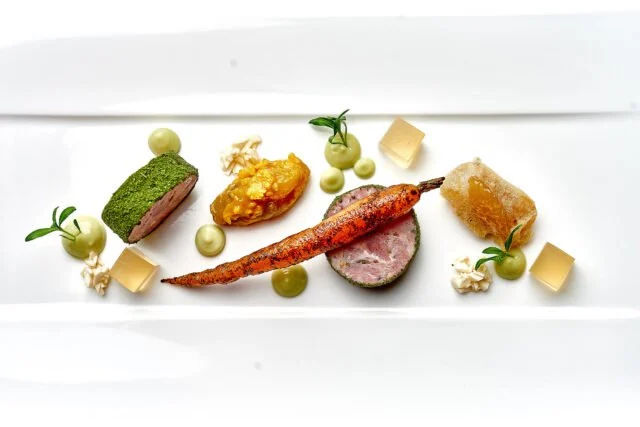
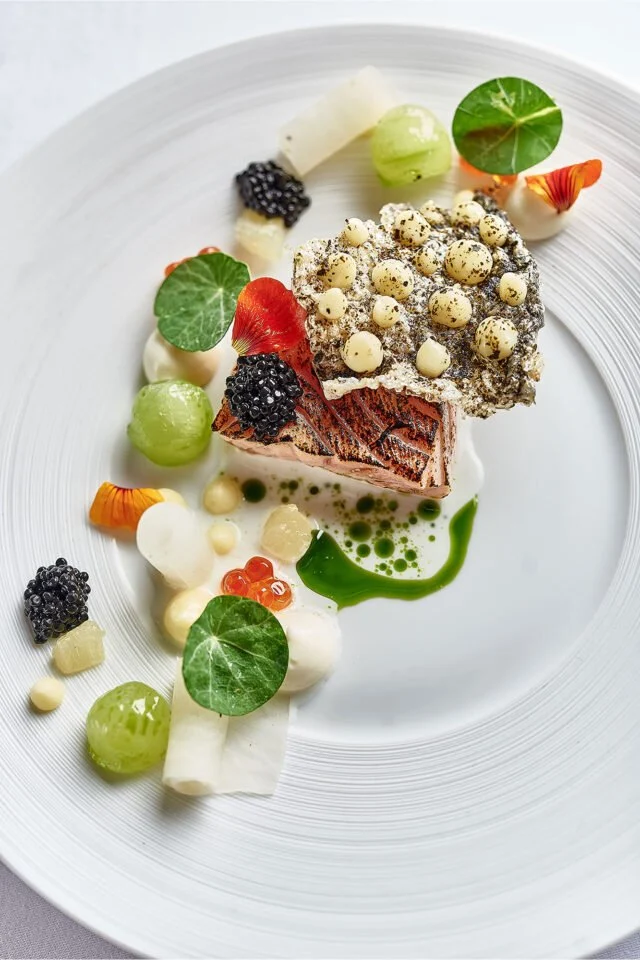
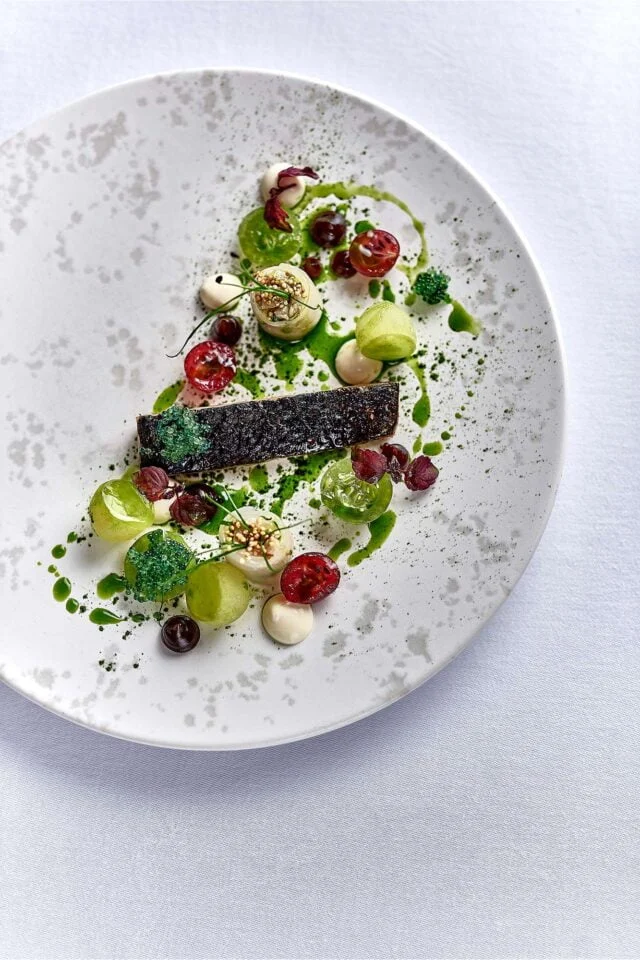
The objectives of the food from the modern fine dining restaurant chef are generally to deliver on taste, texture and presentation.  Extraordinary lengths of labour intensive work will go into delivering on these three fronts but as one chef told me last week – “if something has lemon in it, I want it to taste like a box of lemons!”  The techniques used to extract and enhance flavour and to deliver flavour combinations can be quite breathtaking.

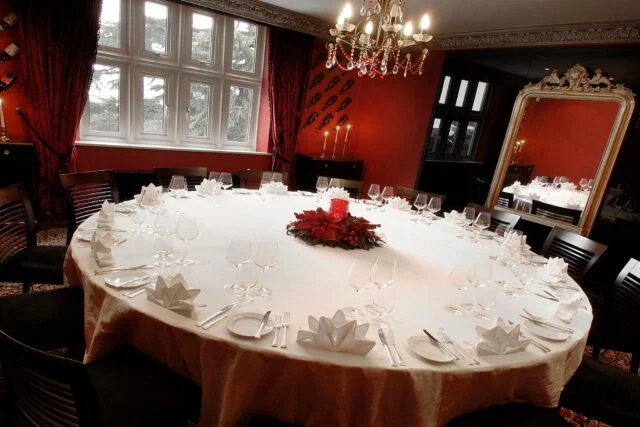
In terms of the dining rooms of the L’ortolan category of fine dining restaurants; I would describe them as a ‘special occasion – like going to the theatre but having the bonus of something to eat!’  There is a relaxed formality about these restaurants – formal enough so that you know you are at an occasion but relaxed enough so that you can relax, feel good and thoroughly enjoy yourself.  Indeed the more often you visit the better the experience, as the level and nature of staff interaction improves naturally as you become more familiar with each other.

Price wise, these restaurants can represent far greater value than is generally understood.  Those that seek out a set lunch will find the food bill not too dis-similar from three courses at their local pub.

In terms of L’ortolan, there is something comforting about returning to certain restaurants; there are those for which you develop an affection for the bricks and mortar.   It would be easy to suggest L’ortolan has that affect but there is so much more; since the days of Richard Sandford and Nico Ladenis, through John Burton-Race, Daniel Galmiche and now Alan Murchison, this building has seen five great Michelin starred chefs.

There is a fundamental difference with the package that is now L’ortolan to those of the past – a very intelligent difference – Alan Murchison has developed a combination of front of house, food, eating environment and value for money that hits the difficult leafy provinces market squarely between the eyes. Don’t get me wrong, there is no implication of compromise or cutting corners, on the contrary; the food is of the highest quality; the service impeccable; the dining room more comfortable than ever – Alan Murchison simply knows how to run a restaurant that delivers the absolute best to their customers at an affordable price point.

Many thanks to Simon for his interesting and enlightening blog.

If you are dining with us at L’ortolan and would like to experience a whole host of tastes, textures and flavours we recommend trying one of our tasting menus, starting from our five course ‘Taste of L’ortolan menu, available Tuesday to Saturday lunchtimes.

Real Wine Month is celebrated nationally during May highlighting organic, biodynamic and natural wines made by artisan growers and winemakers. And we will be taking the opportunity to showcase our diverse and renowned natural wine list.

Throughout May our Sommelier, Craig, will serve guests a variety of natural wines by the glass, introducing them to their quirky, complex, and lighter textures. Craig has worked closely with Head Chef Nick to pair natural wines from France, Italy and Greece with the L’ortolan Menu.


We asked Craig what makes wine ‘natural’?

In the past all wines were ‘Natural Style’ and it wasn’t until the advent of modern wine making methods that this style of wine fell out of favour. The largest benefit of modern wines is how they end up preserved in the bottle, allowing some to age for decades and still be drinkable. Natural wines on the other hand are best drunk young. There is now a surge of wines makers returning to these roots, in an elusive marriage of excellence meets ethics.

A natural wine is about what you leave in rather than take away. A crystal clear looking wine has been through a rigorous purification and clarification process, whereas natural wine will often be cloudy and more intense in colour.

There are two methods of farming ‘natural wine’; Organic wine is farmed without the use of chemical fertilisers or pesticides. The farming of Biodynamic wine also eliminates all chemical pesticides and fertilisers but the main focus is based on planting, pruning and harvesting crops by the phases of the moon.

One of the natural wines we’ll be pairing with the L’ortolan menu is the Pinot Noir ‘Vinifie Sans Soufre’, Pierre Frick from Alsace, France, it’s a light style biodynamic red that has a diverse and adaptable flavour to suit a range of courses.  This Pinot Noir is made without the use of sulphites at any stage allowing the red berry and red cherry characters to retain a classic wild structure.


Dine with us during May
to experience a selection of our natural wines, and don’t forget to ask Craig more about the estates and regions of these lesser known wines.

Events for your Diary

The Real Wine Fair 20th – 22nd May 2012 (Consumer day Sunday 20th May 10am to 6pm) – http://therealwinefair.com/

RAW – The Artisan Wine Fair 20th -21st May 2012 (Consumer day Sunday 20th May 10 am to 6 pm) – http://www.rawfair.com/


Our ‘Day of Excellence’ last Friday was a huge success and attracted over 200 guests, old and new. A big thank you to everyone that attended and raised £800 for Hospitality Action in the raffle. We extend our  gratitude to our partners and suppliers who provided the afternoon with fabulous food and wine tasting and stunning displays.

Sommelier Craig welcomed guests with a glass of Pommery champagne and goodie bag before whisking them off on a tour around the restaurant to sample the many delights on offer. Our ‘behind the scenes’ team from marketing and reservations were on hand and enjoyed meeting  guests that they’d had the pleasure of previously arranging bookings for.

Upstairs in the bulthaup demonstration kitchen, Thermomix kept guests entertained with a rolling demonstration using their unique food processor – a favourite with L’ortolan chefs and great for anyone with food allergies and intolerances.  Cacao Barry brought their popular chocolate samples from around the world whilst Peter from James Gourmet Coffee gave visitors the chance to experience the change in coffee flavour as it progressed through the brewing process.

Some of our guests couldn’t help but spot there wasn’t a Big Green Egg Bus lined up in the car park as originally planned.  Earlier in the week we received the disappointing news that Big Green Egg and their Bus wouldn’t be able to come due to a fault with the engine. Fortunately the L’ortolan chefs are big fans of the barbecue and own a couple of Big Green Eggs, so Head Chef Nick and his team cooked up mouth watering plates of amuse bouches , mini versions of some of  Alan Murchison’s barbecued dishes from the recent Great British Menu on BBC Two.  To wash them down, a variety of rose wines, both sparkling and still from Boutinot. We wish the Bus a speedy recovery and hope to welcome Big Green Egg back for an event during the summer.

Have you ever tried whisky with Cornish Yarg? or dark chocolate?  Sommelier Stephen Nisbet was exciting the tastebuds on the Morrison Bowmore stand with some unusual cheese, chocolate and whisky pairings.  Alongside, local cheese supplier Village Maid shared bite sized chunks of delicious Spenwood, Wigmore and Waterloo.

With the hail falling outside, Jacobs of Reading and L’ortolan florist Flowerstalk added some much needed sparkle with their jewellery and floral displays.  Nirvana Spa attended with some of their gorgeous spa products and guests enjoyed some relaxing mini treatments.  The Glass Room was dedicated to more ‘lifestyle’ stands with photographers Tara Taylor and Julia Conway and exquisite shoes by Silvia Campbell.


Audi Reading
and Specialized bikes drew the short straw being the only exhibitors outside in the elements.  In their fabulous inflatable dome, Specialized, who are due to open a new concept store in Newbury, in the next few weeks, showcased a range of high quality bikes.   At first glance a random inclusion in the restaurant’s exhibitor list but Alan will be riding a Specailized bike when he takes part in his charity cycle challenge from London to Paris in aid of Hospitality Action.  To raise funds for Alan’s event all proceeds from the raffle on the day were donated to Hospitality Action, a benevolent organisation helping hospitality people who have fallen on hard times. The day was concluded with the raffle draw by Alan, and a few lucky guests were present to receive their prize.


Sign up to our monthly email newsletter
to receive information on future open days and events.

With many thanks to Tara Taylor Photography for the wonderful photos of the day.

In the world of wine a dark cloud continues to hover over German wines. Many perceive them as sweet, dull and unfashionable. But for adventurous wine drinker there is much to discover about Germany’s wine regions and the rewards are well worth the effort! Renowned Sommelier, Stephen Nisbet has seen his fair share of resistance to the German wine market within the UK, and strives to change people’s perceptions.

In 2008 at L’ortolan we dedicated each month to pairing a different wine region with the Gourmand menu. Wine by the glass is always a popular choice for diners, so when German wines was proposed as a theme it was confronted with some opposition from the rest of team; concerned that would not appeal to a wider audience. Fine German wines are renowned for their complexity of flavours, which makes them suitable for pairing with a wide range of foods, so they were an obvious choice to include on our global tour of fine wines.  It was decided not to publicise the wines with the menu, instead subtly introduce guests to the German wine pairings with each course.  The pairings were well received and diners wowed by the diversity. As a marketing exercise it grew customer’s knowledge and understanding – confirming Germany’s well-deserved place on the map.

At L’ortolan we stock white, sweet and even red German wines, including top wines from Wirsching, Göttelmann, Friedrich Becker and Werner Näkel. Some of these L’ortolan favourites will feature in this month’s Fine Wines of Germany wine tasting events.

Wednesday 22nd February – Fine Wines of Germany
Stephen will take guests on a journey through different regions, varieties and estates and discover the sheer diversity of wine.
4.30pm to 6.30pm – An Afternoon of German Wine Tasting – £49 per person
7.00pm – German Wine Tasting Dinner – £95 per person

Find out more about our programme of wine tasting events

Last week we welcomed a full house for our Burns Night Supper with whisky tasting.  The night is always a favourite for Scottish Executive Chef Alan Murchison and it was a huge success enjoyed by all!

We kicked off the celebrations with an afternoon of Tutored Whisky Tasting hosted by Stephen Nisbet. Stephen introduced guests to six whiskies during the afternoon accompanied by perfectly matched canapés.

Our afternoon guests enjoyed a few drams of whisky

The evening saw a selection of whisky transformed into cocktails and four course dinner with whisky paired to each course. Alan Murchison and his team served traditional favourites like the sirloin of beef, watercress, tortellini of haggis and oxtail and foie gras.  You can follow more of Alan’s tweets from the kitchen @AlanMurchison

Sirloin of beef, watercress, tortellini of haggis and oxtail, foie gras

We always love to hear from our guests on Twitter… here are a few tweets from our Burns Night guests…

To see a full list of events at L’ortolan in 2012 please visit our Offers & Events page on our website. Follow us on twitter and facebook for all the latest news.

MasterChef 2011 contestant, Annie Assheton impressed the judges down to the final six on this year’s show and now impresses the chefs in the L’ortolan kitchen. Annie tells us about her ambitions to become a food writer and how dinner on the chefs table led to work experience in the L’ortolan Kitchen…

One of my reasons for applying to take part on MasterChef was that I hoped it would lead to all sorts of exciting new experiences and opportunities but whilst I certainly wanted to make a career out of food, working in a professional kitchen was never part of my plan.  Unlike many other competitors, I had no wish to start my own restaurant, café or patisserie, mainly because it was unlikely to fit in with family life.  As a result, it didn’t immediately occur to me that getting some experience in a top restaurant kitchen would do much to help me achieve my goals of writing and teaching about food and cookery.  But then two things happened in quick succession to make me change my mind.

On my 40th birthday my husband surprised me with dinner at the Chef’s Table at L’ortolan, an experience that I would recommend to anyone.  Not only was the menu incredibly inspiring and all of the dishes we tried utterly delicious, but I was also fascinated by the way the kitchen worked.  Contrary to my expectations it was calm, ordered and quietly efficient.  There were no raised voices, let alone shouting, and the obviously harmonious team worked together to produce beautiful and mouth-watering plates of food.  Elliott, the extremely patient head chef running the pass, must have been exhausted by the end of the evening during which I fired endless questions at him about ingredients and techniques.  Not only did I have a fabulous birthday celebration but I also left wanting to learn a great deal more about how that kind of food was produced.

Coincidentally, a few days later I was offered the opportunity to do just that through a family connection.  Elliott very generously agreed to let me come into the kitchen for a lunch service once a week during which I hoped I would pick up some tips about techniques, flavour combinations and unfamiliar ingredients.  I approached the kitchen with some trepidation on my first day, unsure about what to expect and whether or not I would just get in the way.  Thankfully, the first thing Elliott did after introducing me to everyone was to give me a job trimming a large batch of spinach leaves.  It was hardly challenging but had the great benefit of making me feel useful whilst allowing me to absorb the atmosphere of life in a working kitchen; so different from my experiences of being in pro kitchens on MasterChef, in contrived situations and surrounded by television cameras and producers trying to create and capture the drama.

I absolutely love my weekly visit to the L’ortolan kitchen.  I have learnt and been able to practise so many techniques, from boning out saddles of lamb and shaping tuille cones to helping plate up at the pass, and I have been exposed to flavour combinations and ideas which I find incredibly inspiring.  My husband always looks forward to my day at the restaurant because invariably I come home buzzing with new ideas and immediately set about recreating one of the dishes that I have been involved in preparing that day.  I have been amazed at how generous all the chefs are with both their time and their knowledge and now have absolutely no doubt that this experience is going to do much to help me achieve my own ambitions.  Long may it continue!

As the Three Course Summer Lunch Menu continues next week we welcome July’s ‘Cocktail of the Month’, The Ginger Rumster. This is a revitalising blend of Pampero white rum, bitters, lime wedges and a slice of fresh ginger, homemade ginger syrup and orange juice.

L’ortolan’s Sommelier, Jess, chose The Ginger Rumster for it’s refreshing, spiced and complex flavours. The marketing team photographed the creation of this delicious cocktail, and had the privilege of being the first to enjoy a taste! This is definitely a winner for those hot summer days.

The Ginger RumsterJess

The Ginger Rumster Cocktail welcomes you on arrival when dining on the Three Course Summer Lunch Menu. To sample Jess’s ‘Cocktail of the Month’ book a place on the Summer Lunch before the end of July. Until the end of June the ‘Cocktail of the Month’ is the ‘Vanilla and Apple Cooler’, and watch this space for the August Cocktail!

Follow

Get every new post delivered to your Inbox.